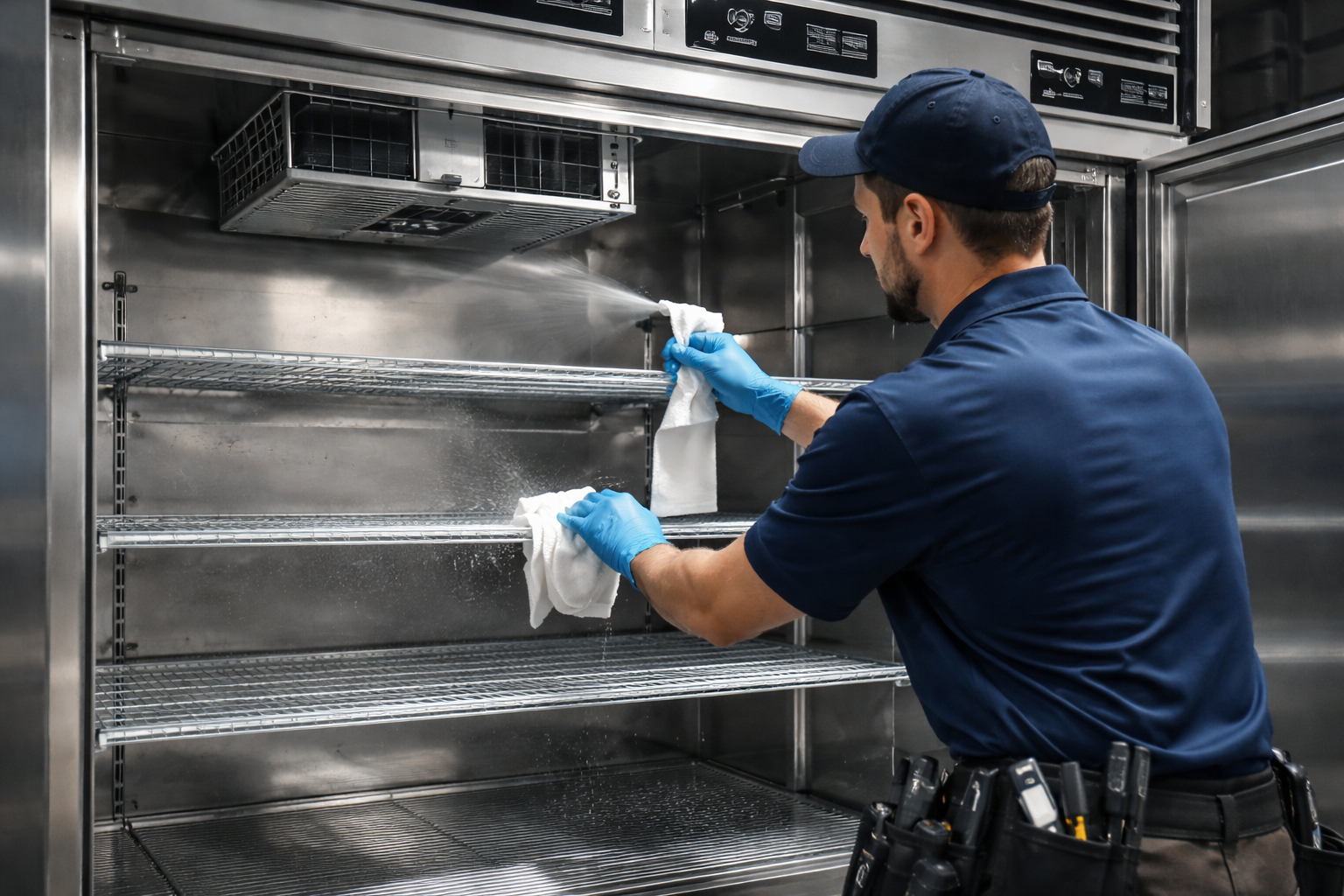
Cleaning a commercial refrigerator is not a cosmetic task. It is a food safety obligation, an energy efficiency measure, and one of the most overlooked forms of preventive maintenance in foodservice, hospitality, and retail environments. Unlike residential refrigerators, commercial units operate under continuous load, higher door-opening frequency, heavier product density, and stricter regulatory oversight. As a result, improper or inconsistent cleaning directly impacts temperature stability, equipment lifespan, and compliance with health regulations.
This guide is written from a commercial refrigeration professional’s perspective. It goes beyond surface-level advice and focuses on why cleaning matters, how it should be done correctly, and when it becomes a technical issue rather than a janitorial one.
Why Regular Cleaning of Commercial Refrigerators Is Critical
In commercial refrigeration, cleanliness is inseparable from performance. A dirty refrigerator is not simply unsanitary; it is mechanically compromised.
From a food safety standpoint, organic residue, moisture, and temperature fluctuation create an ideal environment for bacterial growth. Mold, yeast, and pathogens often develop first in overlooked areas such as door gaskets, drain lines, and evaporator compartments. Health inspectors are well aware of this and frequently cite refrigeration cleanliness as a core compliance checkpoint.
From a mechanical perspective, dirt disrupts airflow. Dust-clogged condenser coils, grease-coated fan blades, and obstructed air channels force the system to operate at higher pressures and longer run times. This leads to:
- Increased energy consumption
- Elevated compressor head pressure
- Shortened compressor life
- Inconsistent cabinet temperatures
- Premature component failure
In real-world service scenarios, many compressor failures are not manufacturing defects but the result of neglected cleaning and maintenance.
Finally, there is the operational cost factor. A poorly maintained commercial refrigerator can consume significantly more electricity while delivering worse cooling performance. Over time, this turns a cleaning oversight into a measurable financial loss.
Preparing the Commercial Refrigerator for Cleaning
Professional cleaning always begins with preparation. Skipping this step is where most damage, injuries, and costly mistakes occur.
The first and most important step is power disconnection. Commercial refrigerators contain exposed electrical components, fans, heaters, and control boards. Cleaning any internal or mechanical component while the unit is energized creates a serious safety risk. Lockout/tagout procedures are strongly recommended in professional environments.
Next, all products must be removed and properly staged. Perishable items should be transferred to another temperature-controlled unit or insulated cold storage. Cleaning should never be rushed while food remains inside the cabinet, as splashing water or chemical residue can contaminate inventory.
Personal protective equipment is not optional. Gloves protect against chemicals and sharp metal edges. Eye protection is strongly advised, especially when working around evaporator compartments or pressurized cleaning tools.
Drain lines and electrical housings should be clearly identified before cleaning begins. One of the most common professional service calls involves water intrusion into electrical areas caused by improper wash-down practices.
Preparation is not about speed. It is about risk elimination.
Step-by-Step Interior Cleaning Process
Interior cleaning must be methodical and material-aware. Commercial refrigerators are built from stainless steel, aluminum, coated steel, plastics, and rubber components—each reacts differently to heat, moisture, and chemicals.
Start by removing shelves, racks, and tray slides. These components should be cleaned separately using warm water and a food-safe degreasing solution. Avoid abrasive pads that can scratch surfaces and create future contamination points.
Interior walls and ceilings should be cleaned using non-corrosive, food-safe cleaners. Excessively hot water should be avoided, particularly in refrigerated spaces, as it can cause rapid condensation and moisture retention.
Door gaskets deserve special attention. These flexible seals are one of the most common sources of mold growth and energy loss. Gaskets should be gently scrubbed using a soft brush and mild cleaner. Aggressive chemicals or stiff brushes can crack the rubber, leading to air leaks and temperature instability.
Drain pans and drain lines are frequently ignored and often responsible for foul odors and water leaks. Organic buildup in drain lines can cause blockages, leading to standing water inside the cabinet. Clearing and sanitizing these components is essential for both hygiene and system health.
Interior cleaning should conclude with a clean water rinse and thorough drying. Moisture left behind is not cleanliness—it is a future problem.
Exterior & Mechanical Component Cleaning
This is the section where commercial refrigeration cleaning separates itself from basic janitorial work.
The condenser coil is the most critical mechanical component affected by cleanliness. Its function is to release heat absorbed from inside the cabinet. When the coil is clogged with dust, grease, or debris, heat transfer efficiency drops dramatically. The compressor compensates by working harder, increasing wear and energy consumption.
Condenser coils should be cleaned using a coil-specific cleaner and low-pressure methods. High-pressure washing is rarely appropriate and often bends fins or drives debris deeper into the coil.
Fan blades and motor housings should be inspected and cleaned to ensure unobstructed airflow. Even a thin layer of grease on fan blades reduces efficiency and increases vibration.
The compressor compartment should be kept free of dust, cardboard, packaging materials, and grease accumulation. Restricted airflow in this area is a common contributor to overheating and thermal shutdowns.
Mechanical cleaning should never involve excessive water near electrical terminals, contactors, or control boards. When in doubt, dry methods and professional servicing are preferred.
Approved Cleaning Products & What to Avoid
Using the wrong cleaning product can permanently damage a commercial refrigerator.
Food-safe sanitizers approved for commercial kitchens should always be prioritized. These products are designed to eliminate bacteria without leaving harmful residues.
Acidic cleaners should be used cautiously and only on compatible surfaces. Stainless steel, for example, can discolor or pit when exposed to harsh acids. Chlorine-based products and bleach are particularly risky; while effective disinfectants, they are corrosive to metals and can degrade gaskets and coatings.
Pressure washers are another common mistake. While tempting for speed, high-pressure water can force moisture into insulation panels, electrical housings, and evaporator compartments—creating long-term problems that may not be immediately visible.
The rule is simple: if a product or method feels aggressive, it probably is.
Cleaning Frequency & Maintenance Schedules
There is no universal cleaning schedule for all commercial refrigerators. Frequency depends on usage, environment, and application.
High-volume restaurants, bakeries, and meat operations require more frequent cleaning than low-traffic retail environments. Walk-in coolers exposed to flour, grease, or open food preparation areas accumulate contaminants faster than sealed reach-ins.
As a general framework:
Interior surfaces should be cleaned regularly as part of daily or weekly sanitation routines. Door gaskets and drains should be inspected weekly. Condenser coils should be cleaned at least quarterly, and more often in greasy or dusty environments.
However, cleaning alone does not replace professional preventive maintenance. If a refrigerator exhibits temperature fluctuation, icing, unusual noises, excessive run times, or persistent odors, cleaning may no longer be sufficient.
At that point, a licensed refrigeration technician should inspect airflow balance, refrigerant charge, defrost operation, and component health. Attempting to solve mechanical issues with cleaning alone often delays proper repairs and increases damage.


